
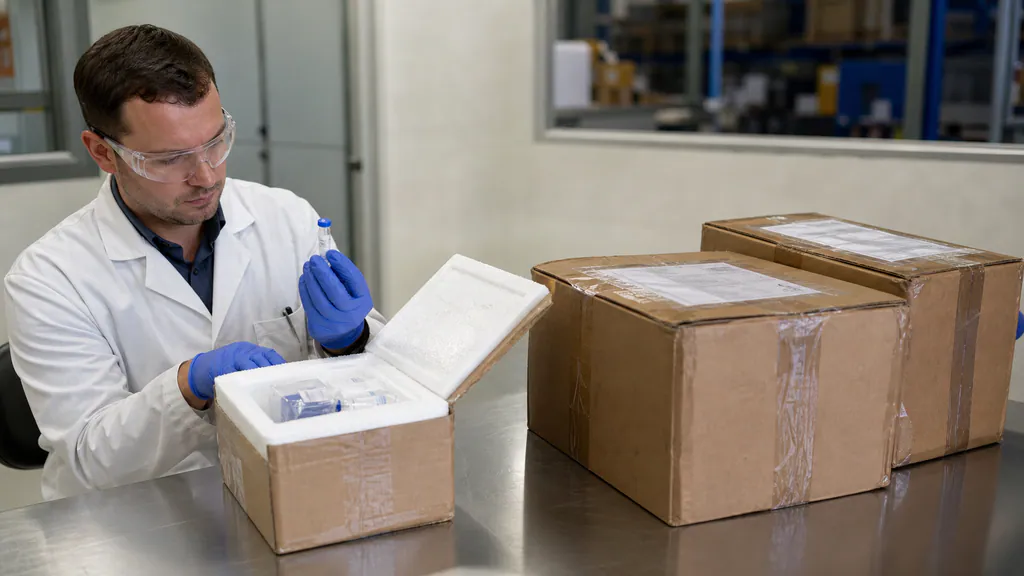
A peptide sample answers a limited question: does this supplier and specification deserve further evaluation? A bulk order asks whether the same requirements can be met across a larger quantity, supported by the correct batch documents and delivered as agreed.
The safest process uses three separate approvals: the sample, the proposed bulk batch and the final shipment. A good-looking sample should not quietly become approval for material from an unidentified future batch.
Sample order vs bulk order at a glance
| Stage | Decision being made | Evidence to keep |
|---|---|---|
| Sample evaluation | Is the product, documentation and supplier response suitable? | Approved specification, sample lot, COA, observations and any test results |
| Bulk release | Is the actual bulk batch and commercial configuration acceptable? | Bulk lot, batch-specific COA, quantity, packaging version, quote and release approval |
| Shipment receipt | Did the delivered order match what was released? | Packing list, received lot and count, condition, shipping record and discrepancy notes |
This creates an evidence trail. Without it, “the sample was fine” can mean anything from a visual impression to a full analytical review—and may refer to a batch that never appears in the commercial shipment.
Gate 1: decide what the sample must prove
Before requesting a sample, write down the decision it is meant to support. A procurement team may need to evaluate the vial and packaging, while a quality reviewer needs the exact lot and applicable test report. Operations may be watching response time, labeling and how well the parcel survives transit.
A useful sample record identifies the peptide or blend, labeled strength, form, lot number, packaging and the document supplied with it. It should also record what was not assessed. For example, visual inspection can confirm label legibility and visible condition; it cannot establish identity or purity.
Communication is part of the evaluation. The supplier should be able to explain whether the sample came from current stock, a development run or a batch that could be reserved for the bulk order. An unclear answer at this stage usually becomes more expensive after payment.
The question most buyers miss: is the bulk material the same batch?
There are several legitimate sample-to-bulk paths:
- the sample and bulk allocation come from the same lot;
- the sample came from current stock, but the bulk order will use a later lot;
- the sample evaluated a standard specification before a custom production run; or
- a small pilot run will precede full production.
None of these paths is automatically wrong. The mistake is treating them as equivalent.
If the lot changes, the new lot needs its own batch-specific review. The supplier can manufacture to the same specification, but a COA for the sample lot does not become the COA for the bulk lot. Our guide to reading a peptide COA explains how to match the material name, method, result and lot identifier.
Build a sample-to-bulk bridge record
The bridge record is a short approval table connecting what was learned from the sample to what must be confirmed for bulk release. It can live in a spreadsheet, purchasing system or controlled form.
| Control point | Sample evidence | Bulk confirmation | Receipt evidence |
|---|---|---|---|
| Product | Name, strength, form and agreed specification | Same specification or documented approved change | Label and packing list match |
| Batch | Sample lot recorded | Proposed bulk lot identified | Received lot matches release |
| Quality documents | Sample-lot COA reviewed | Bulk-lot COA reviewed before release | COA retained with receiving record |
| Packaging | Sample presentation observed | Vial, label, box and carton version approved | Count, seals and visible condition checked |
| Quantity | Evaluation amount | Units, boxes or mass stated in order | Delivered count reconciled |
| Delivery | Sample transit observed | Incoterm, carrier, destination and timing agreed | Tracking, condition and exceptions recorded |
The value is not the form itself. It is the explicit handoff between people: procurement does not assume quality approved the lot, quality does not assume artwork approved the carton and receiving does not assume a packing list proves product identity.
Gate 2: release the actual bulk order
Bulk purchasing introduces decisions that a sample parcel may never test. First, establish whether the quoted quantity is stocked, allocated from an existing batch or requires production. A custom composition, vial strength or private-label package can change both minimum order quantity and lead time; our peptide MOQ guide separates production minimums from packaging and commercial minimums.
The quote or pro forma invoice should name the product, specification, pricing unit, quantity, currency and payment points. It should also identify whether test reports are available before payment, before shipment or only after production. “COA included” is incomplete if no one has established which lot that COA will cover.
Packaging deserves the same precision. Record the vial and closure, count per box, boxes per carton, label text and artwork version. For private-label work, one dated approval file is safer than a trail of chat attachments with similar names. The wholesale peptide supplier guide covers repeat packaging and reorder planning in more detail.
Finally, approve changes rather than letting them happen informally. If the available lot, quantity, artwork or delivery date changes, the supplier should identify the change and the buyer should decide whether it requires a new review.
Write the shipping plan as part of the order
“Shipping included” does not define who carries risk, handles import clearance or pays duties. The agreed Incoterm should include the named place—for example, the term without the location is incomplete.
The International Chamber of Commerce’s Incoterms guidance explains how the rules allocate obligations, costs and risk between buyer and seller. The commercial record should also state the destination, carrier or service level, carton count, insurance decision, tracking and any documented temperature requirement.
Product descriptions should remain consistent across the invoice, packing list and other shipping documents. Inconsistent names or quantities create avoidable delays even when the physical goods are correct.
Gate 3: match the shipment to the release
Receiving is not a ceremonial final step. Count cartons and units, inspect seals and visible damage, then match the product, strength and lot against the approved order and packing list. Confirm that the retained COA covers the received lot—not the sample lot or a generic example report.
Record transit or temperature concerns promptly, with photographs where useful. A discrepancy log makes the supplier response measurable and provides evidence for the next reorder.
Once the shipment is accepted, keep the specification, approval, lot documents and receiving record together. That file becomes the baseline when a future quote proposes a new batch, package or lead time.
How quality guidance applies
ICH Q7 is a guideline for active pharmaceutical ingredients. It should not be cited to imply that a research product is an API or an approved medicine. Its materials-management principles are nevertheless useful context: purchase against an agreed specification, evaluate suppliers of critical materials, maintain batch identification and verify identity under the applicable quality system.
For a research buyer, the practical lesson is straightforward: the specification, supplier, lot and evidence must refer to the same material at each decision point.
The purchasing rule to remember
Approve the sample for fit, the bulk batch for release and the shipment for receipt. The bridge between them is what turns a good sample into a controlled buying decision.
Certiva can provide the available evaluation option, proposed bulk path, applicable lot documents, packaging choices, lead time and destination-based quote when those requirements are included in the inquiry. See our bulk peptide sourcing page or send the sample-to-bulk requirements.
Research peptides are supplied for laboratory research use only and are not for human consumption.
Sources and further reading
- ICH Q7: Good Manufacturing Practice Guide for Active Pharmaceutical Ingredients
- ICC: Incoterms 2020 questions and answers
Frequently asked questions
What is the difference between a peptide sample and a bulk order?
A sample helps verify product and supplier fit. A bulk order must also prove that the approved specification, batch documents, packaging, quantity and delivery plan can be repeated at scale.
Does a good peptide sample guarantee the bulk order will match?
No. The sample and bulk material may come from different batches. Buyers should document what the sample proved, identify the proposed bulk batch and approve its batch-specific evidence before shipment.
Should a buyer test a sample before placing a bulk order?
Testing depends on the buyer's quality system and intended research use. At minimum, the buyer should define the evidence required at sample, bulk-release and receipt stages rather than assuming one document covers all three.
What should a sample-to-bulk approval record contain?
It should connect the approved specification, sample lot, observations or test results, proposed bulk lot, applicable COA, packaging version, quantity, shipment documents and named approvers.
What changes when a peptide order becomes bulk?
Bulk purchasing adds inventory allocation or production, MOQ and volume pricing, artwork control, carton configuration, freight terms, import documents, release timing and repeat-order planning.
For research use only. Not for human consumption. This article is educational and makes no medical, therapeutic, or dosing claims.
← More sourcing & supply guides · Have a question? Start an inquiry →