
GLP-1 & Weight-Management Research
Start with a direct answer, then compare pathways, published results, common side effects, and the newest investigational candidates in plain English.
Semaglutide vs Tirzepatide: Trial Results & Differences
Compare semaglutide and tirzepatide by receptor targets, SURMOUNT-5 weight-loss results, side effects, approval history, and research specifications.
Read the main guide →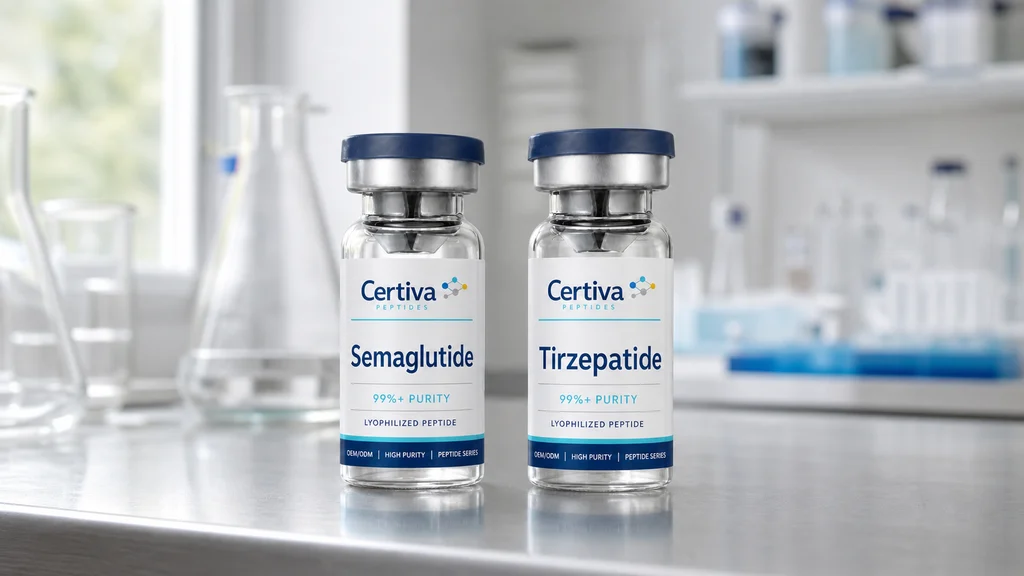
24 more plain-English guides

Does Semaglutide Reduce Alcohol Cravings? 2026 Trial
Yes. A small 2026 trial found oral semaglutide reduced heavy drinking days, drinks per drinking day and daily-life cravings, but more research is needed.
Aug 17, 2026
Survodutide Phase 3 Results: 13% Weight Loss in 2026
Survodutide produced 13.0% average weight loss at 76 weeks in a 2026 Phase 3 trial. See the results, side effects and how the dual agonist works.
Aug 17, 2026
Does GLP-1 Make You Exercise More? What 2026 Data Found
No clear evidence shows that GLP-1 treatment makes people exercise more. A 2026 review found mostly unchanged activity and a possible small drop in daily movement.
Aug 12, 2026
Is an Oral GLP-1 a Peptide? The 2026 Answer
Some oral GLP-1 medicines are peptides and others are not. Oral semaglutide is a peptide; orforglipron, aleniglipron, and elecoglipron are small molecules.
Aug 12, 2026
Berobenatide 2026: Monthly GLP-1 Phase 2b Results
Berobenatide is an investigational monthly GLP-1 peptide. Phase 2b monthly maintenance produced up to 12.3% placebo-adjusted weight loss at week 28.
Aug 8, 2026
CagriSema 2026: 14.2% Weight Loss in REIMAGINE 2
CagriSema produced 14.2% average weight loss at 68 weeks versus 10.2% with semaglutide in REIMAGINE 2 among adults with type 2 diabetes. See the data.
Aug 8, 2026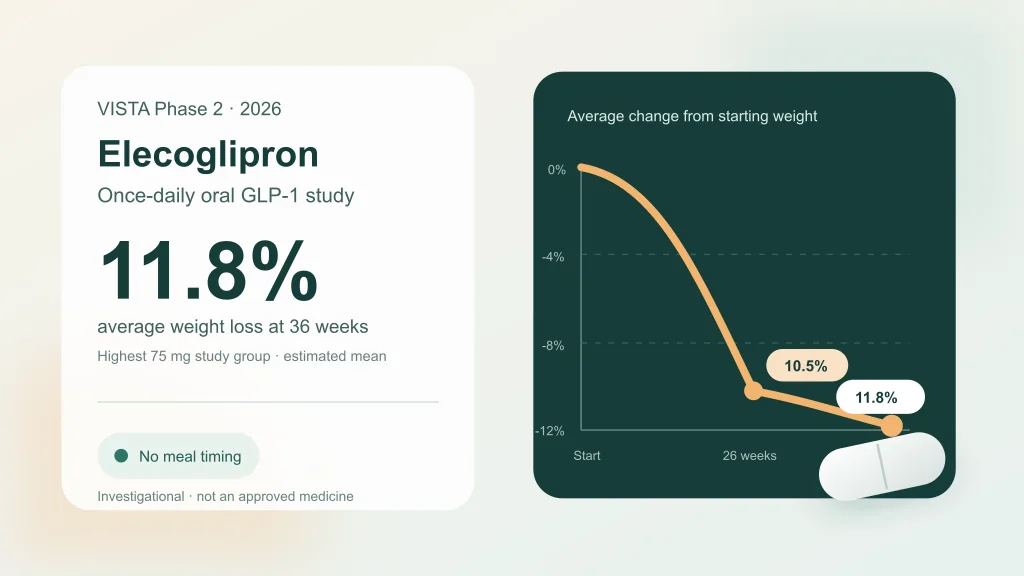
Elecoglipron 2026: 11.8% Weight Loss in 36 Weeks
Elecoglipron produced up to 11.8% average weight loss at 36 weeks in Phase 2. It is a once-daily oral small-molecule GLP-1, not a peptide. See the VISTA data.
Aug 8, 2026
Aleniglipron 2026: Up to 11.3% Weight Loss in 36 Weeks
Aleniglipron produced up to 11.3% placebo-adjusted weight loss at 36 weeks in Phase 2b. See how this oral GLP-1 pill differs from peptide drugs.
Aug 6, 2026
GLP-1 Muscle Loss: What the 2026 Apitegromab Trial Found
A 2026 Phase 2 trial found 1.9 kg less lean-mass loss with apitegromab plus tirzepatide, a 54.9% relative retention result, with similar weight loss.
Aug 6, 2026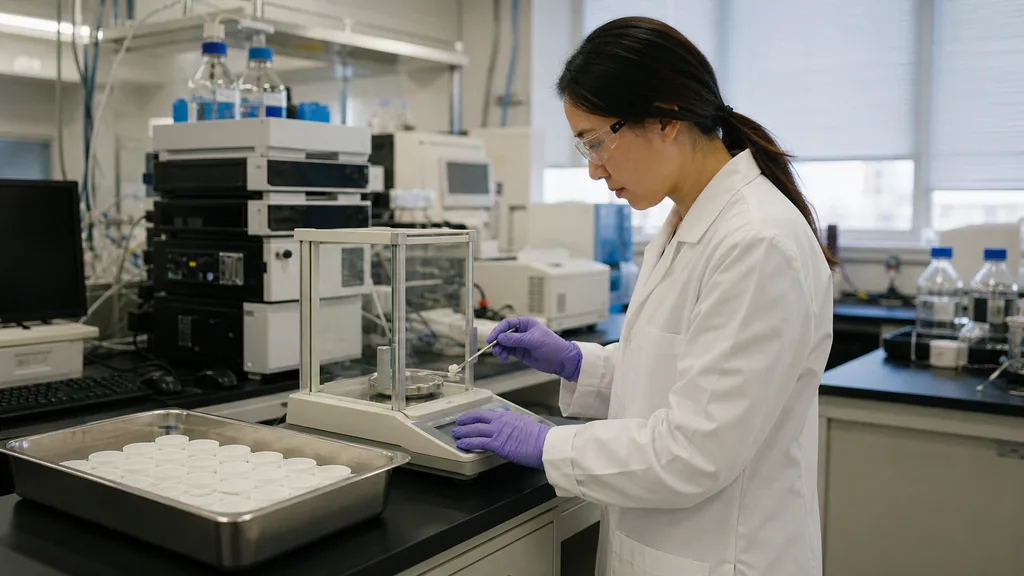
Oral Ribupatide 2026: 11.9% Weight Loss in 26 Weeks
Oral ribupatide produced up to 11.9% average weight loss at 26 weeks in Phase 2. Learn how the dual GLP-1/GIP peptide works and what comes next.
Aug 6, 2026
BI 3034701: Phase 2 GLP-1/GIP/NPY2 Triple Agonist
BI 3034701 is a recruiting Phase 2 GLP-1, GIP and NPY2 triple agonist. Review the trial design, mechanism and evidence available so far.
Aug 5, 2026
UBT251 2026 Results: 19.7% Weight Loss in 24 Weeks
UBT251 is a GLP-1, GIP and glucagon triple agonist that produced up to 19.7% average weight loss in 24 weeks. See why researchers are watching.
Aug 5, 2026
MariTide 2026: Monthly GLP-1 Results & Phase 3
MariTide is Amgen’s once-monthly GLP-1 and GIP-blocking conjugate. Phase 2 participants averaged up to about 20% weight loss at 52 weeks; Phase 3 is underway.
Aug 5, 2026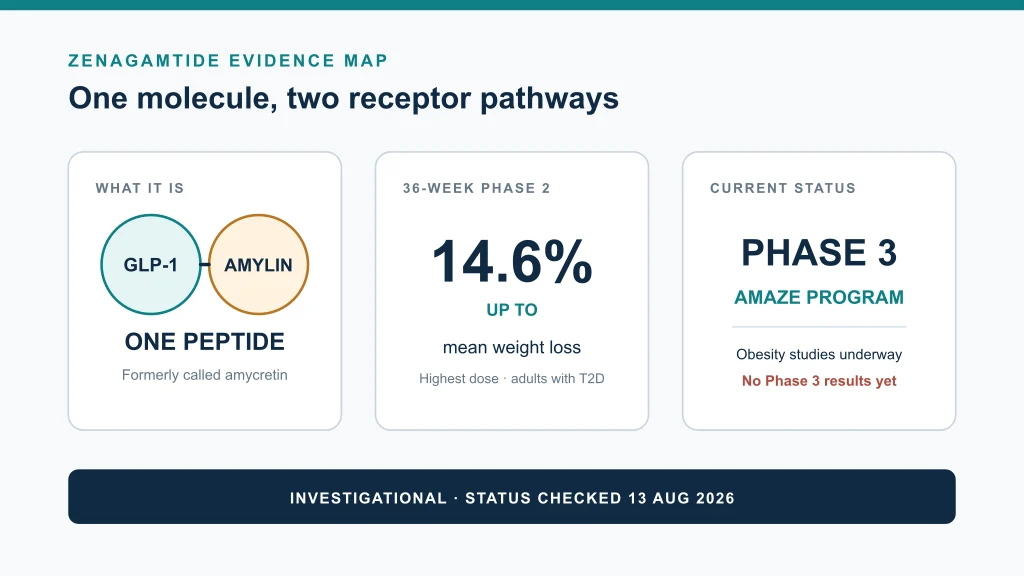
What Is Zenagamtide? Results and Phase 3 Status
Zenagamtide, formerly amycretin, is a single GLP-1/amylin peptide. Review its Phase 2 results and registered Phase 3 program as of August 2026.
Aug 5, 2026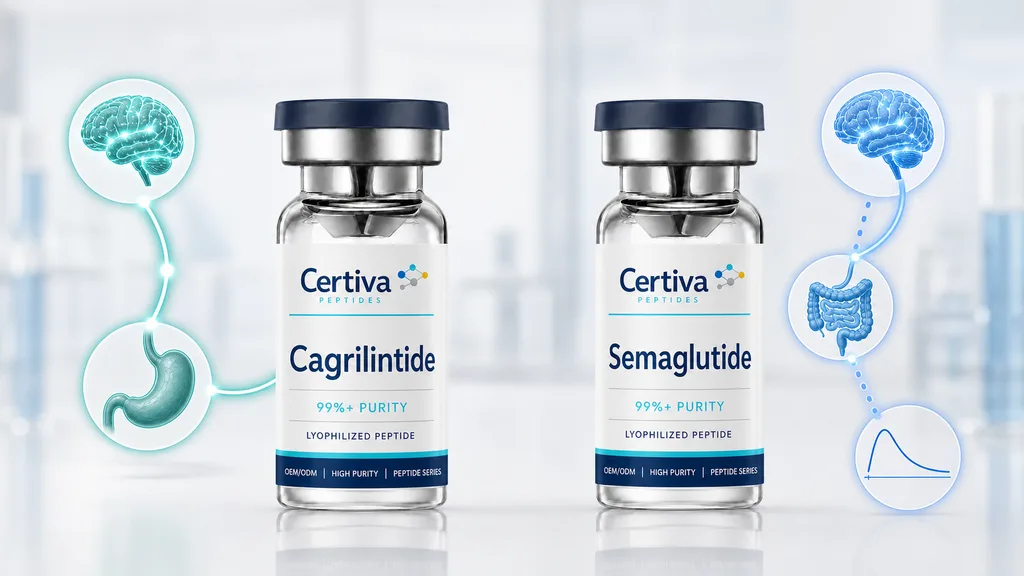
Cagrilintide vs Semaglutide: Which Is Better?
Semaglutide produced the larger stand-alone weight-loss result, while cagrilintide added the amylin pathway that made the combination stand out.
Jul 24, 2026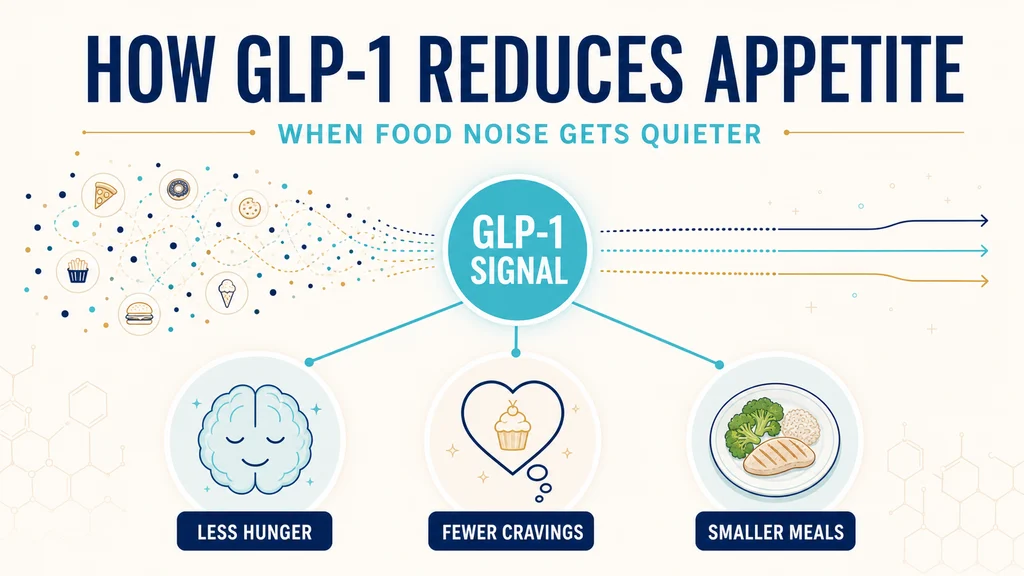
GLP-1 Hunger, Satiety and Food Aversion Explained
Learn how GLP-1 medicines can change hunger, fullness, food noise and food aversion—and why these experiences are not the same thing.
Jul 24, 2026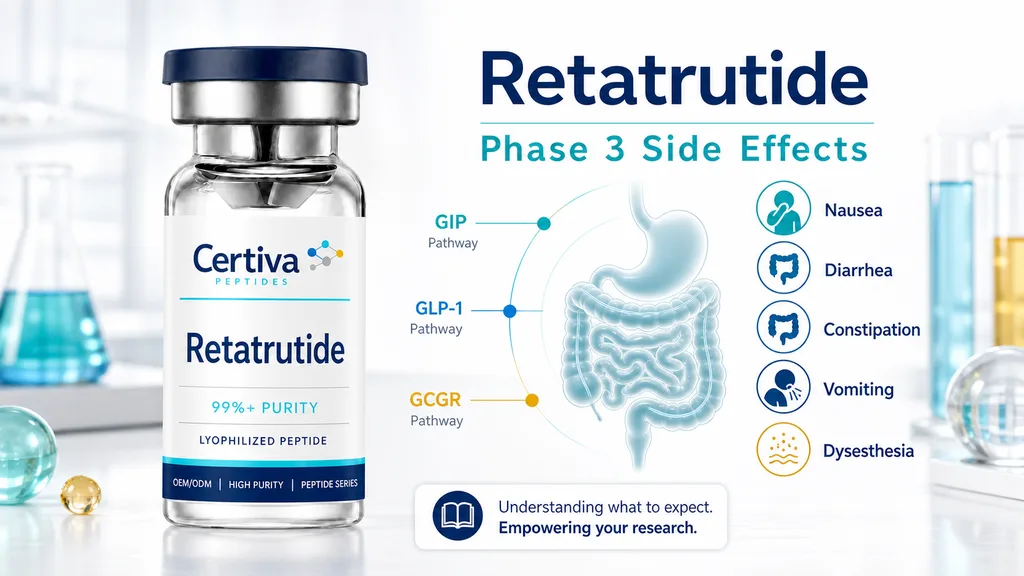
Retatrutide Side Effects: What Phase 3 Found
The most common retatrutide side effects are nausea, diarrhea, constipation and vomiting. Phase 3 reports say most were mild to moderate. See the rates.
Jul 24, 2026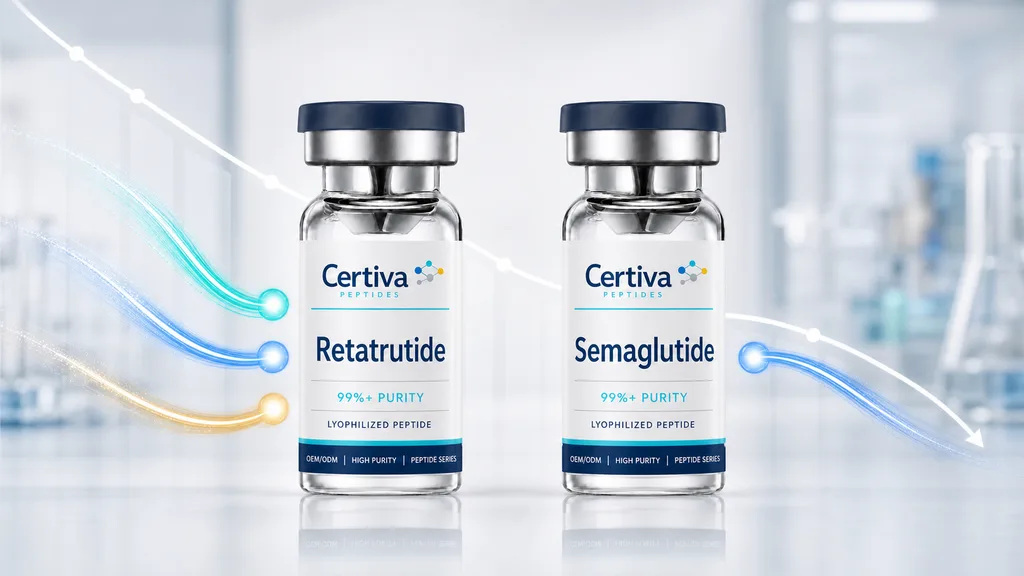
Retatrutide vs Semaglutide: Which Is Better?
Retatrutide has reported the larger topline average weight-loss result, while semaglutide has the longer approved track record. Compare both simply.
Jul 24, 2026
Semaglutide Side Effects: What Is Normal and What Is Not?
The most common semaglutide side effects are nausea, diarrhea, vomiting, constipation and stomach pain, mostly during dose escalation. See the rates.
Jul 24, 2026
Tirzepatide Side Effects: What Should You Expect?
The most common tirzepatide side effects are nausea, diarrhea, vomiting, constipation and stomach pain. Most are digestive. See rates and timing.
Jul 24, 2026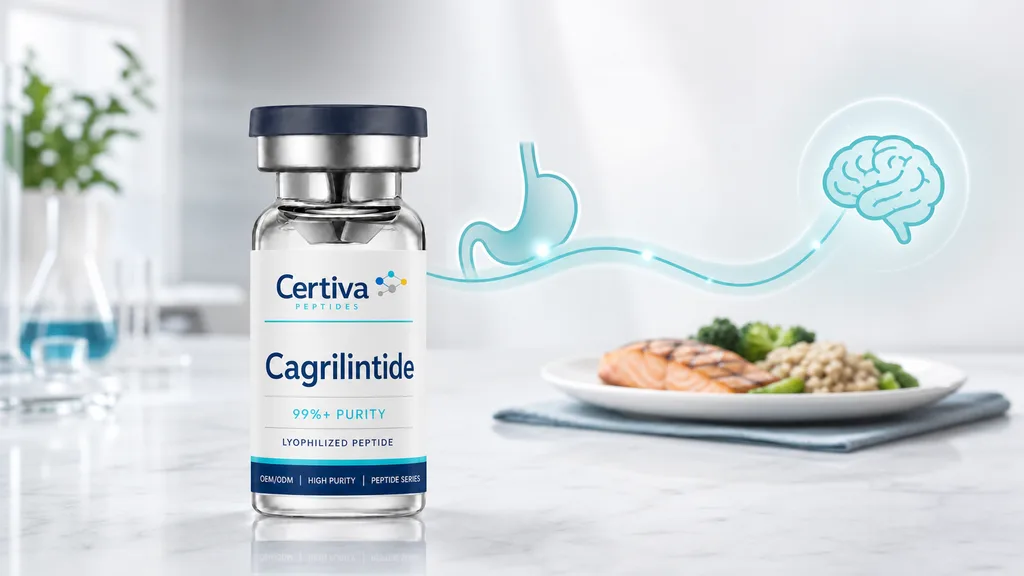
What Is Cagrilintide? The Amylin Peptide Explained
Cagrilintide is a long-acting amylin analog studied for appetite control and weight management. Learn how it works and why CagriSema matters.
Jul 24, 2026
What Is Semaglutide? GLP-1 Peptide Explained
Semaglutide is a synthetic GLP-1 peptide used in approved medicines. Learn how it works, how it differs from tirzepatide, and what clinical trials found.
Jul 24, 2026
Retatrutide Phase 3 Results: What We Know in 2026
Retatrutide is not FDA approved. July 2026 topline data reported 20.8% and 22.6% average weight change at 80 weeks in two Phase 3 trials.
Jul 23, 2026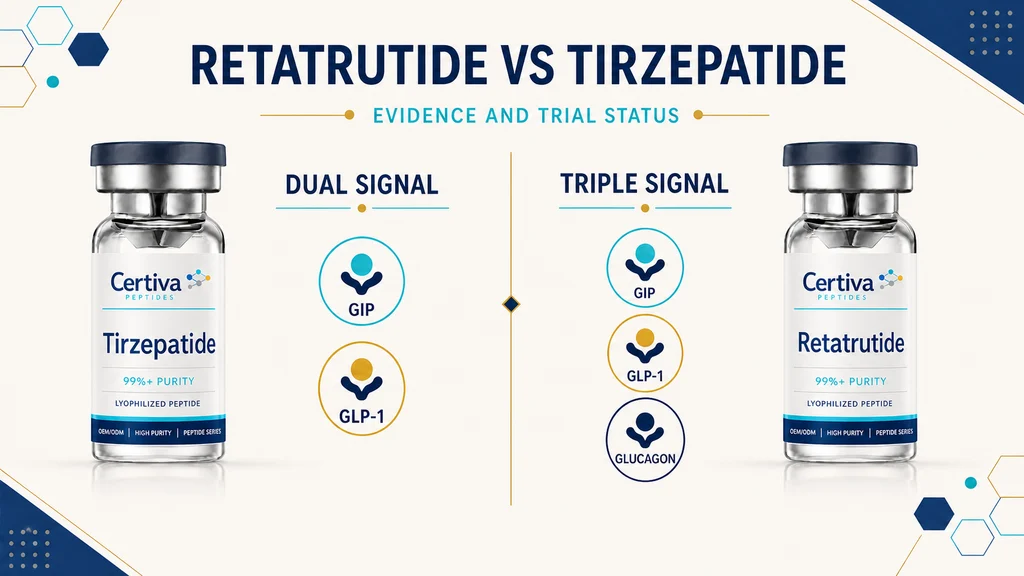
Retatrutide vs Tirzepatide: 2026 Evidence Compared
Retatrutide and tirzepatide differ in receptor activity, evidence and approval status. Compare the trials without treating separate studies as a head-to-head result.
Jul 23, 2026Ready for the next step?
Use the guides to understand the decision, then review the relevant Certiva products, documents, or inquiry options.